
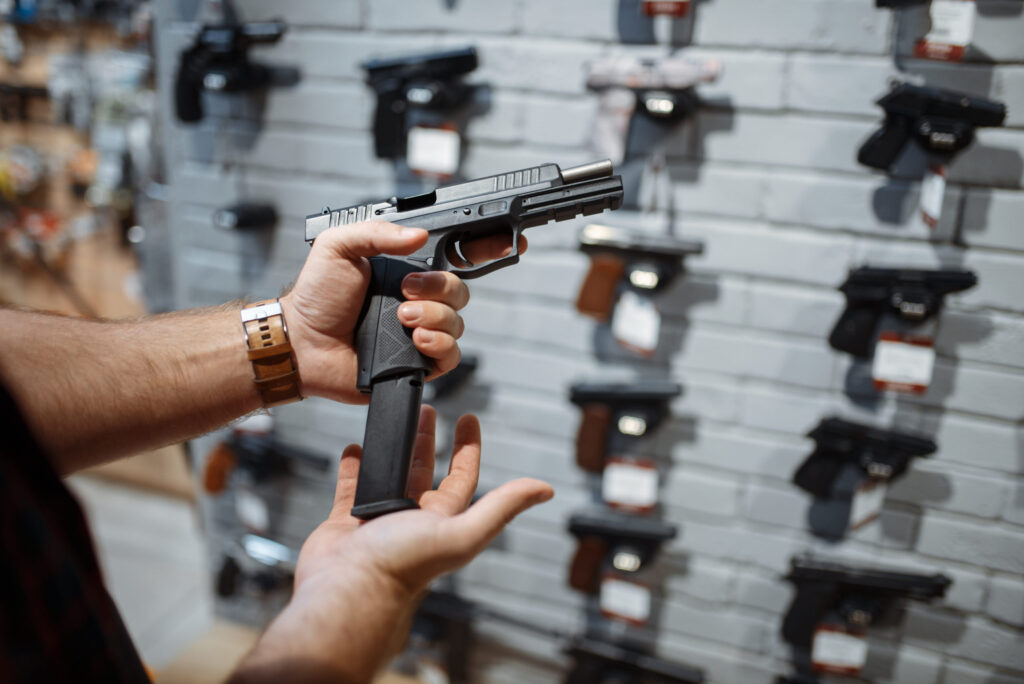
Selecting an appropriate payment processor is essential. Merchants have to find the balance between compliance, security, and customer convenience, and this is where compliant gun merchant payments play a critical role amidst stringent regulations and increased-than-average processing conditions.
Why is it so important to select an appropriate payment processor?
The firearm merchants are in a business category that is considered by most general payment providers to be too risky and as such; a processor that is conversant with this industry would significantly increase the chances of approval and the stability of the long-term accounts.
What to know about processing payments for firearms?
Merchants need to be aware of the legal regulations they are supposed to follow to sell firearms in their state or area of residence, such as the possibility of a license and the necessity to have documentation. These regulations affect the procedure on the approval of transactions, the customers who can purchase the product, and the verification actions that have to be integrated into the payment process.
The sale of firearms is a high-risk type of business.
Distribution of firearms is categorised as being of high risk because of the possibility of fraud, money laundering, and other criminal misuse and processors will adopt more rigid procedures in underwriting and monitoring the activities.
The usual problems that gun dealers have when it comes to payments.
The processors charge higher rates to gun dealers since they are charging the high-risk price of the industry. They also have rigorous onboarding inspections and could be required to implement more secure measures, like additional encryption or multi-factor authentication, in order to minimise chargebacks and fraud.
The firearm sale regulations in the US.
In the US, the Bureau of Alcohol, Tobacco, Firearms, and Explosives provides federal regulation of the sale of firearms, with additional regulation imposed by individual states. Background checks, age limitations, and prohibitions of the Gun Control Act of 1968 are only some of the requirements that determine who can legally make a purchase and consequently what payments can legally be accepted by merchants.
How to make sure that there is compliance when selling guns.
One possible method to remain compliant is to work with a processor specialised in the firearms market and develop regulatory requirements into its systems and policies.
● Firms that research how to handle payments made by gun dealers.
The merchants need to turn to processors that actively engage in business with firearms-related businesses and have a history of doing so. Among the signs that could be helpful, it should be noted that the company is well acquainted with the compliance requirements of the industry, has a well-developed onboarding process, and has tools that facilitate both brick-and-mortar and online acquisition of firearms.
● Inquire about prices, and security measures.
Merchants must enquire thoroughly before they sign up for setup costs, per-transaction fees, and other charges incurred on risk management. Another crucial point in order to ensure the safety of the business and the clients is to verify what anti-fraud tools, chargeback protections, and data-protection measures are present.
● Search to find seamless integration.
The processor must be integrated with the merchant to have a seamless connection with the website’s existing or point-of-sale system or inventory software enabling staff to handle orders and payments in one environment.
● Research regulations
Merchants are encouraged to ensure they keep abreast with federal and state firearms regulations and pick up processors that comply with the Payment Data Security Standard.
● Identify an easily scalable payment processor.
As a gun enterprise expands, its processor is expected to sustain increasing transactions, more sales points and where applicable more currencies.